In July 2025, Nourishing Hope's Sheridan Market was preparing for the effects of changes to SNAP, the federal food assistance program. The concern was not an observed rush caused by the new law at that point. It was the possibility that households with less support would need more help from pantries already serving large numbers of people.
A Chicago Tribune report featured Angela Cimarusti-Clifford, Nourishing Hope's senior manager of pantry programs. Nourishing Hope's own summary says she had not yet seen an immediate effect from HR-1, but expected the effects to follow as policy changes reached households. That timing matters: a pantry can plan for increased demand before the full impact appears at its door.
Why food pantries were watching closely
SNAP helps households buy groceries. When benefits shrink or become harder to keep, families may turn more often to community food programs. The impact also lands on pantry operations: staff must anticipate how much food to obtain, how many visits they can support, and whether case workers have time to help people navigate other needs.
Reporting from the Chicago Sun-Times earlier that month put a number on the existing pressure. Nourishing Hope's then interim CEO Mitzi Baum said more than 4,000 people who were also enrolled in SNAP had newly sought food pantry assistance during the previous year. She also described a wait of three to four weeks for case worker support. Those figures described demand before the new changes had fully taken effect.
A household view of an abstract policy
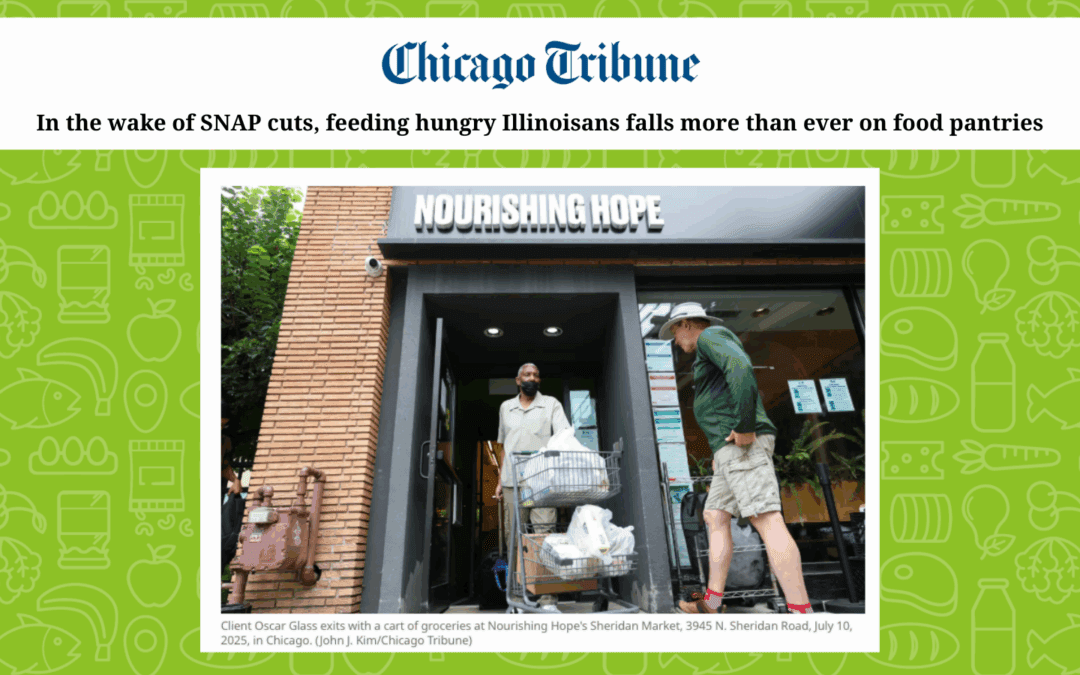
The Tribune's visit to Sheridan Market included a detail that makes the pressure concrete: on the day one shopper visited, eggs were available for the first time in months, limited to one carton per household. Availability depends on donations, supply, and the number of people seeking help. A pantry cannot simply replace every dollar of lost federal food support.
That is why the original coverage is worth reading alongside the partner's response. It places a national policy debate inside the routine work of a neighborhood market and shows what organizations were trying to prepare for in 2025.
Read Nourishing Hope's summary and link to the Chicago Tribune story. See also the Chicago Sun-Times reporting on pantry demand.
Check out more articles
Discover more breakthroughs from our initiatives.